
Commercial ·
Renovating Occupied Apartment Units Without Losing Occupancy
The renovation is rarely what costs you occupancy. The way it is scheduled, and how much warning residents get, almost always is.
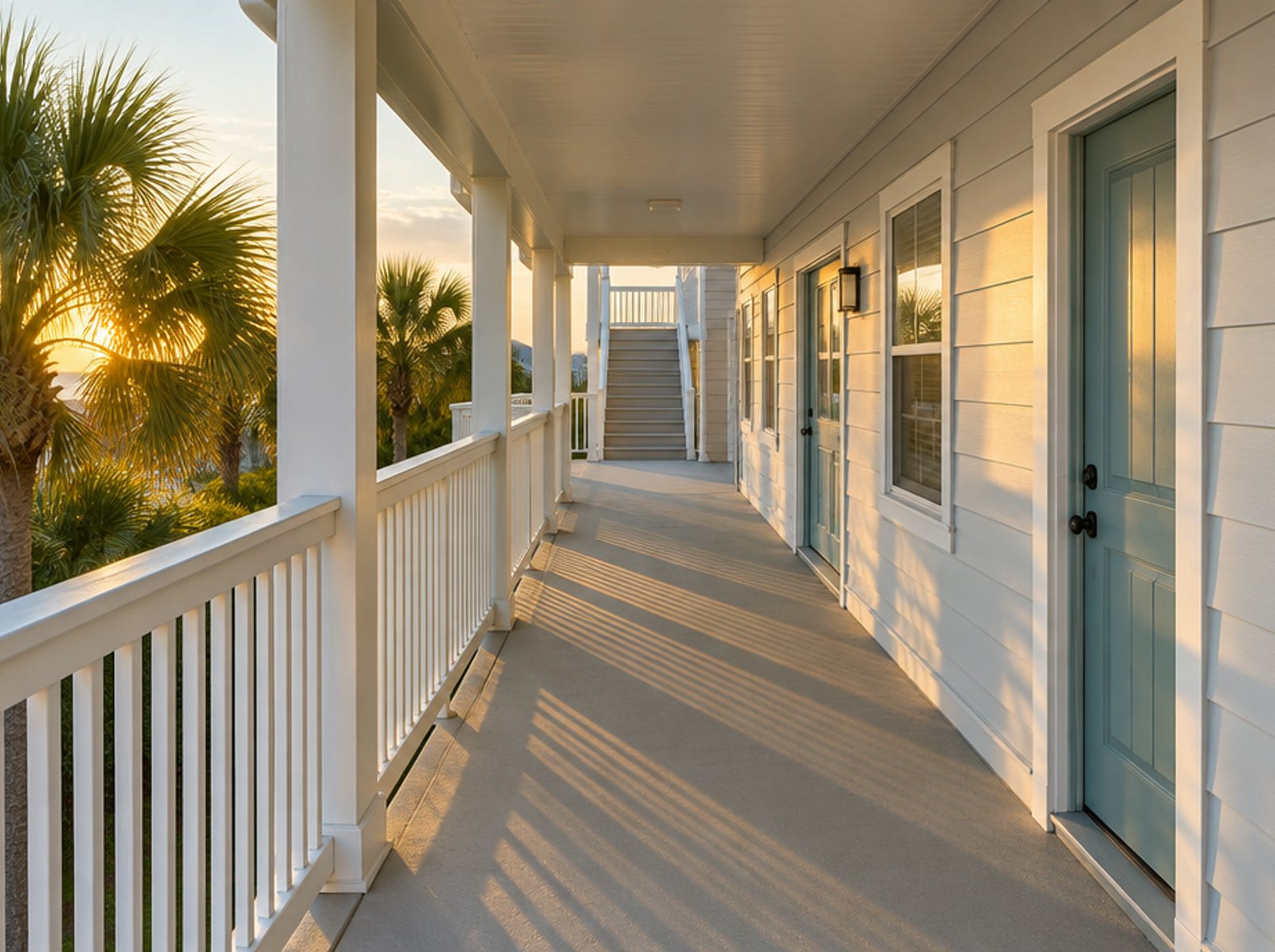
Image described: A coastal apartment breezeway with white railings, teal unit doors and a stair tower in the distance at golden hour
This one is for property owners and managers rather than homeowners. If you run a property in Horry or Georgetown County and you are planning work while people are still living there, these are the decisions that matter most.
Occupancy is lost to disruption, not to dust
Residents are more tolerant of construction than most owners expect. What they will not tolerate is not knowing. Losing their parking with no warning, water off on a day nobody told them about, or a crew in the corridor at seven in the morning when the notice said nine.
Almost every renewal lost during a renovation traces back to a scheduling decision rather than to the work itself.
Decide first: occupied turns or vacant turns
Vacant turns are faster, cheaper per unit and less disruptive, but they need vacancy you may not have. Occupied turns keep revenue coming but take longer per unit and need much tighter scheduling.
Most properties end up doing both, and the useful exercise is deciding which unit types go which way before anything starts, rather than unit by unit as you go.
Phase by building, not by trade
It is tempting to send the flooring crew through every building, then the paint crew, because it looks efficient on paper. It is miserable to live through, because every resident experiences the whole renovation instead of their part of it.
Phasing by building means a resident is disrupted for a defined window and then it is over for them. It also means you always have finished buildings to show prospects.
Protect three things above all
Parking. The single most common complaint. Where crews park and where materials stage should be agreed before day one, in writing.
Access. Nobody should be unable to get to their own front door, and stair towers and breezeways need a plan for when they are the work.
Water and power. Short, announced, and finished when you said. An outage that runs two hours past the notice costs more goodwill than the whole renovation.
Notice, and who writes it
Your office knows your residents and should own the wording. What the contractor owes you is enough lead time to send it, and a schedule reliable enough that you are not sending corrections.
We give the notice content and the timing in advance for that reason. An office surprised by its own contractor's crew is an office that stops trusting the schedule.
Weekly reporting is not admin
It is the thing that lets you answer a resident's question without calling anyone. Where we are, what is next, what changed. In writing, weekly, without you asking.
How we run it
Walkthrough and scope. Unit by unit pricing so you can see the cost of one before committing to forty. A schedule and phasing plan agreed before we start. Resident notice with real lead time. Execution with weekly reporting. Then punch and turnover unit by unit rather than all at the end.
We take on up to 50 units at a time, which is a limit we set deliberately so we can actually hold the schedule we gave you.
Related